It’s Not Just About the Fat: Why Cold-Pressed, Unfiltered, and Seasonal Oils Matter
Discover why the quality and seasonal alignment of your cooking oils — like cold-pressed and unfiltered fats — matter more than the fat type itself. Learn how Ayurveda and modern wellness agree.
AYURVEDANUTRITIONGUT HEALTHAUTOIMMUNE
Swetha Bhat
3 min read

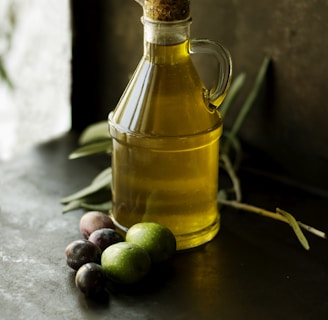
Cooking Oils, Processing, and the Forgotten Question of Nourishment
When it comes to cooking oils, most conversations stop at which fat to use: ghee vs. olive oil, coconut vs. canola, butter vs. seed oils. But the real question you should be asking is:
Is your oil cold-pressed, unfiltered, and clean?
Because it’s not just what you eat — it’s how it’s processed and whether your body actually recognizes it as nourishment.
What Does “Cold-Pressed and Unfiltered” Mean?
Cold-pressed oils are extracted without high heat, which preserves the oil’s vital nutrients, antioxidants, and flavor. They’re often unrefined and free from the chemicals used in mass-market oil production.
Unfiltered oils, though cloudier in appearance, retain their natural plant compounds — things your gut and cells love. These oils are alive, rich in prana (life force), and deeply nourishing when used appropriately.
Refined oils, on the other hand, are stripped.
Stripped of nutrients.
Stripped of vitality.
Often deodorized, bleached, and full of preservatives. They may be shelf-stable, but your body isn’t a shelf.
The Seasonal Secret: Eat (and Cook) Like the Earth Does
In Ayurveda, fat isn’t demonized. It’s revered — as long as it’s right for your constitution and your season. The oils you choose, like nourishment, should shift with nature’s cycles:
Summer (Pitta Season)
Cooling oils, such as cold-pressed coconut oil, extra virgin olive oil, or sunflower oil, are ideal. They pacify heat and soothe inflammation.
Fall & Early Winter (Vata Season)
This is the season of dryness and movement. Your body needs grounding and lubrication. Choose cold-pressed sesame oil, ghee, or almond oil to nourish the nervous system and support skin stability.
Late Winter & Spring (Kapha Season)
Kapha season brings heaviness and congestion. Favor warming oils such as cold-pressed mustard, flaxseed, or cold-pressed sesame oil, spiced with ginger, turmeric, or ajwain, to support digestion and metabolism.
What About Deep Frying?
We get it — life happens. Festivals, family meals, or the occasional crispy treat. If you're deep-frying, use oils that can withstand high heat without breaking down into harmful compounds.
Best options for occasional deep frying include:
Ghee (clarified butter — stable and deeply nourishing)
Cold-pressed coconut oil
Cold-pressed peanut oil
Unrefined avocado oil
Cold-pressed sunflower oil
These oils have high smoke points and natural stability — especially ghee and coconut oil, which were traditionally used in Ayurvedic and ancestral kitchens for their heat-resilience and medicinal qualities.
Pro Tip: Never reuse deep-frying oil multiple times — oxidized oils can become toxic quickly.
Why This Matters (Especially Now)
Many health issues today — from hormonal imbalances to digestive distress and skin issues — trace back to poor-quality fats and overly processed oils. These industrial oils congest the liver, trigger inflammation, and rob your body of true nourishment.
If your oil is:
Bleached
Deodorized
Solvent-extracted
Stripped of its natural compounds
Then it no longer functions as food — it becomes a toxin.
Modern research now confirms what traditional food cultures always knew: high-heat refining, bleaching, deodorizing, and chemical extraction destroy antioxidants, create inflammatory byproducts, and reduce the body’s ability to metabolize fats efficiently.
Cold-pressed, unrefined oils retain:
Natural tocopherols (vitamin E)
Polyphenols and antioxidants
Stable fatty acid structures
Refined oils lose these protective compounds, making them far more prone to oxidation – especially when heated.
A Brief Word on Trans Fats & Over-Processed Oils
Not all harmful fats come from the source – many come from processing.
Trans fats are formed when oils are industrially hydrogenated or repeatedly overheated. This alters their molecular structure into something the body does not recognize as nourishment.
Research shows trans fats:
Increase inflammation
Raise LDL (bad cholesterol) and lower HDL (good cholesterol)
Disrupt insulin sensitivity and hormonal balance
Significantly increases cardiovascular disease risk
(New England Journal of Medicine; WHO)
From an Ayurvedic lens, these fats are tamasic – dead, heavy, and obstructive. They weaken Agni, congest the liver, and contribute to ama (toxic buildup), ultimately depleting Ojas.
Where they hide:
Hydrogenated or partially hydrogenated oils
Commercial baked goods and fried foods
Margarine, shortening, and ultra-processed snacks
Reused or repeatedly heated cooking oils
Even good oils can turn harmful when overheated or reused. Oxidized oils generate inflammatory compounds and free radicals – which is why oil quality, heat tolerance, and proper use matter as much as oil choice itself.
Choosing the Right Oils at Home
Here’s a quick guide to help you upgrade your kitchen:
Look for:
“Cold-pressed” or “expeller-pressed”
“Unrefined” or “virgin”
Glass bottles or dark packaging
Oils from a single source (not blends)
Organic, non-GMO sources
Avoid:
“Vegetable oil” (a misleading term for industrial blends)
High-heat refined seed oils (soy, canola, corn, safflower)
Anything labeled “light,” “pure,” or “neutral” — these are often stripped
Final Thoughts: Fat is Not the Enemy — But Disconnection Is
While modern diets focus on macros, Ayurveda also teaches us to focus on life-force. The oils we cook with either support that life-force or suppress it.
It’s not about fearing fat.
It’s about choosing living fat.
Fat that nourishes your brain, hormones, joints, and spirit.
So next time you reach for cooking oil, ask:
Is this seasonal, alive, and sacred?
If not, it’s time to switch — not to a trend, but to tradition.