Somatic Yoga vs Hatha Yoga: Healing Trauma from Within
Discover the difference between Somatic Yoga and Hatha Yoga, how each works with the body and mind, and why Somatic Yoga is especially powerful for healing trauma and restoring inner balance.
AYURVEDAMENTAL HEALTH
Swetha Bhat
2 min read


In today’s world, where anxiety, trauma, and chronic stress are deeply woven into our bodies, movement practices like yoga are no longer just about flexibility — they’re about healing. Among the many forms of yoga available, Somatic Yoga stands out as a deeply restorative and trauma-informed approach that differs significantly from the more traditional Hatha Yoga.
Let’s explore what Somatic Yoga is, how it compares to Hatha Yoga, and why it holds profound potential for those seeking to heal from trauma.
What Is Somatic Yoga?
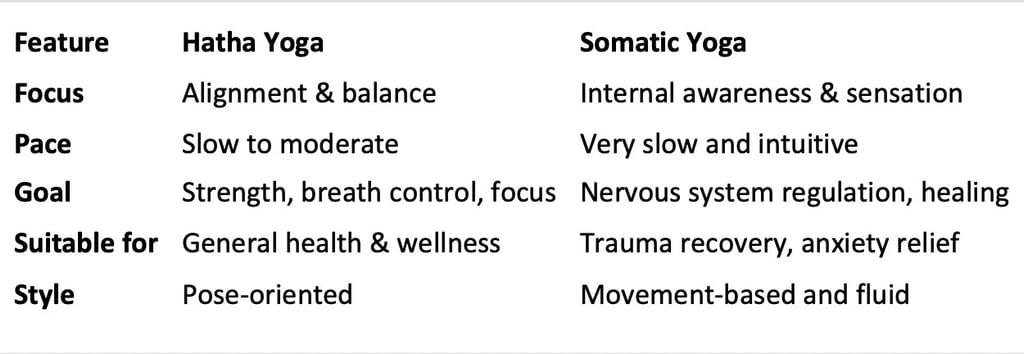
Somatic Yoga blends gentle yoga postures with somatic awareness techniques. “Somatic” comes from the Greek word soma, meaning “the living body in its wholeness.” This practice focuses on internal sensations, emotional release, and nervous system regulation, rather than physical achievement or external form.
Somatic Yoga involves:
Slow, mindful movement
Deep interoception (feeling sensations from within)
Breath and nervous system awareness
Gentle re-patterning of movement to release trauma held in the body
It’s less about doing and more about noticing. The practice invites you to tune in and respond to what your body is truly asking for.
How Somatic Yoga Differs from Hatha Yoga
Hatha Yoga, while also slower-paced compared to styles like Vinyasa, emphasizes:
Alignment of posture
Breath control (pranayama)
Physical flexibility and strength
A steady and disciplined approach to asana practice
While Hatha Yoga promotes mindfulness and inner awareness, its intention is often more structured, focused on balancing the sun (ha) and moon (tha) energies through form, breath, and mental clarity.
In contrast, Somatic Yoga is non-linear and intuitive. There’s no rigid structure. Instead of pushing through discomfort or holding a pose perfectly, you gently explore micro-movements and the emotional or neurological feedback they elicit.
Why Somatic Yoga Is Especially Helpful for Trauma
Trauma isn’t just a psychological imprint — it’s stored in the body. The nervous system, muscles, fascia, and even breathing patterns change in response to trauma. Over time, this can lead to chronic pain, anxiety, dissociation, and a sense of disconnection from one’s body.
Here’s how Somatic Yoga supports trauma healing:
1. Regulates the Nervous System
By slowing down and tuning into internal cues, you help shift from fight-or-flight (sympathetic mode) to rest-and-digest (parasympathetic mode). This builds a sense of safety in the body.
2. Releases Stored Tension
Subtle, mindful movements encourage the body to release held tension in a way that feels natural and safe — without retraumatizing.
3. Builds Body Trust
Trauma often causes people to disassociate or feel numb. Somatic practices gently restore that lost connection and help rebuild trust with the body.
4. Empowers Choice and Control
Unlike strict movement patterns, Somatic Yoga empowers practitioners to move in a way that feels right, which is vital for trauma survivors who may feel disempowered or disconnected from their agency.
Final Thoughts
While Hatha Yoga and Somatic Yoga both honor the body, their approaches and outcomes differ significantly. Hatha strengthens and balances; Somatic soothes and reconnects. For anyone navigating trauma, burnout, anxiety, or chronic stress, Somatic Yoga offers a safe, gentle, and deeply transformative path home — to your body, to your breath, and to your true self.
Ready to explore Somatic Yoga?
Start with just 5 minutes a day. Lie on your mat. Close your eyes. Ask your body: What do you need right now? Then move gently from that place. Healing begins there.